Design — 2026-03-12
The Architecture of the Kitchen
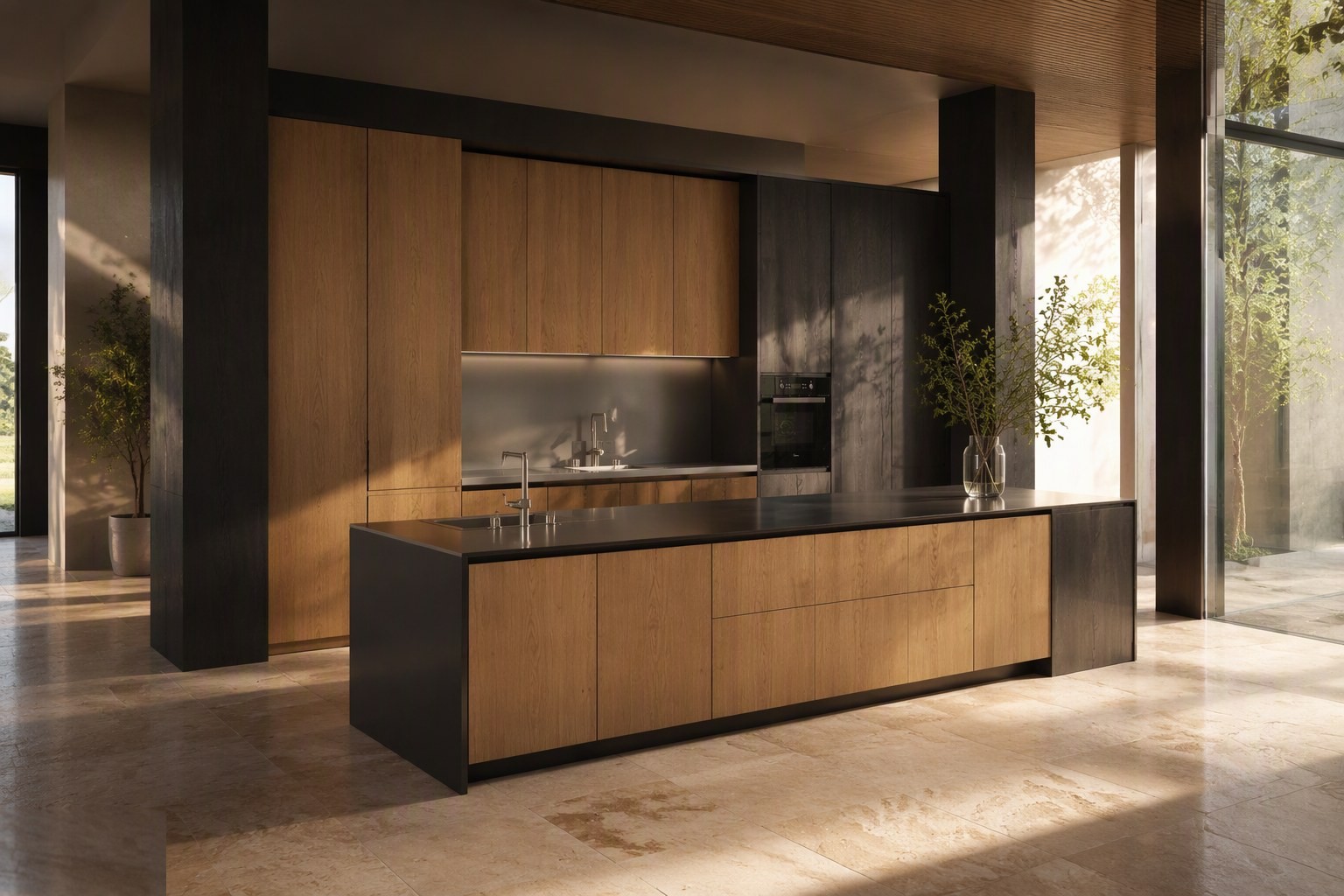
Most kitchens are decorated. Ours are built. The difference is not stylistic — it is structural, and it decides whether a kitchen still feels inevitable twenty years from now.
Structure before surface
When we begin a custom kitchen in our Foshan atelier, we do not start with colours or handles. We start with loads, spans and junctions — the same questions an architect asks of a building. The island is a slab bridge. The tall unit is a shear wall. The shadow gap is a dilatation joint. Once the structure is honest, the kitchen needs almost no decoration at all.
This is why a SYMATTI kitchen reads as calm. Nothing on its surface is apologising for what is underneath.
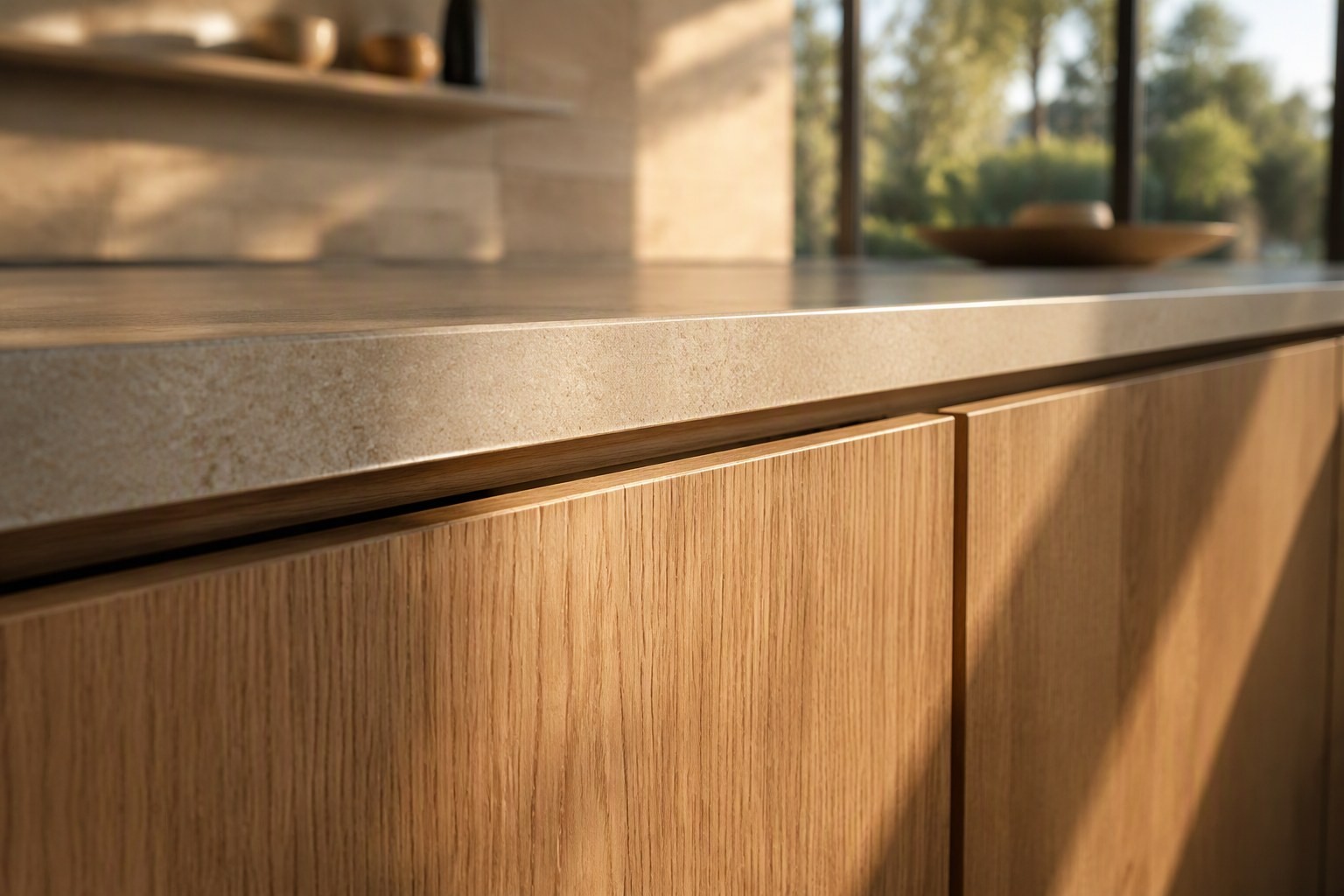
A building in miniature
A kitchen compresses every problem of architecture into three metres: circulation, light, storage, gathering. We plan it the way we would plan a small house. Sightlines are drawn before cabinets. Daylight is modelled across the worktop before a single veneer is chosen. The result is a room that behaves like architecture — it organises how people move, meet and stay.
What this means for your home
An architectural kitchen ages differently. Because its beauty is structural rather than applied, it does not date with fashion. Materials are selected to patinate, not to degrade. And because every SYMATTI system is built on one dimensional grid, a kitchen designed today can be extended, reconfigured or repaired decades from now. That is what we mean when we say: structure first, decoration never.