Material — 2026-01-28
Travertine: A Material Study
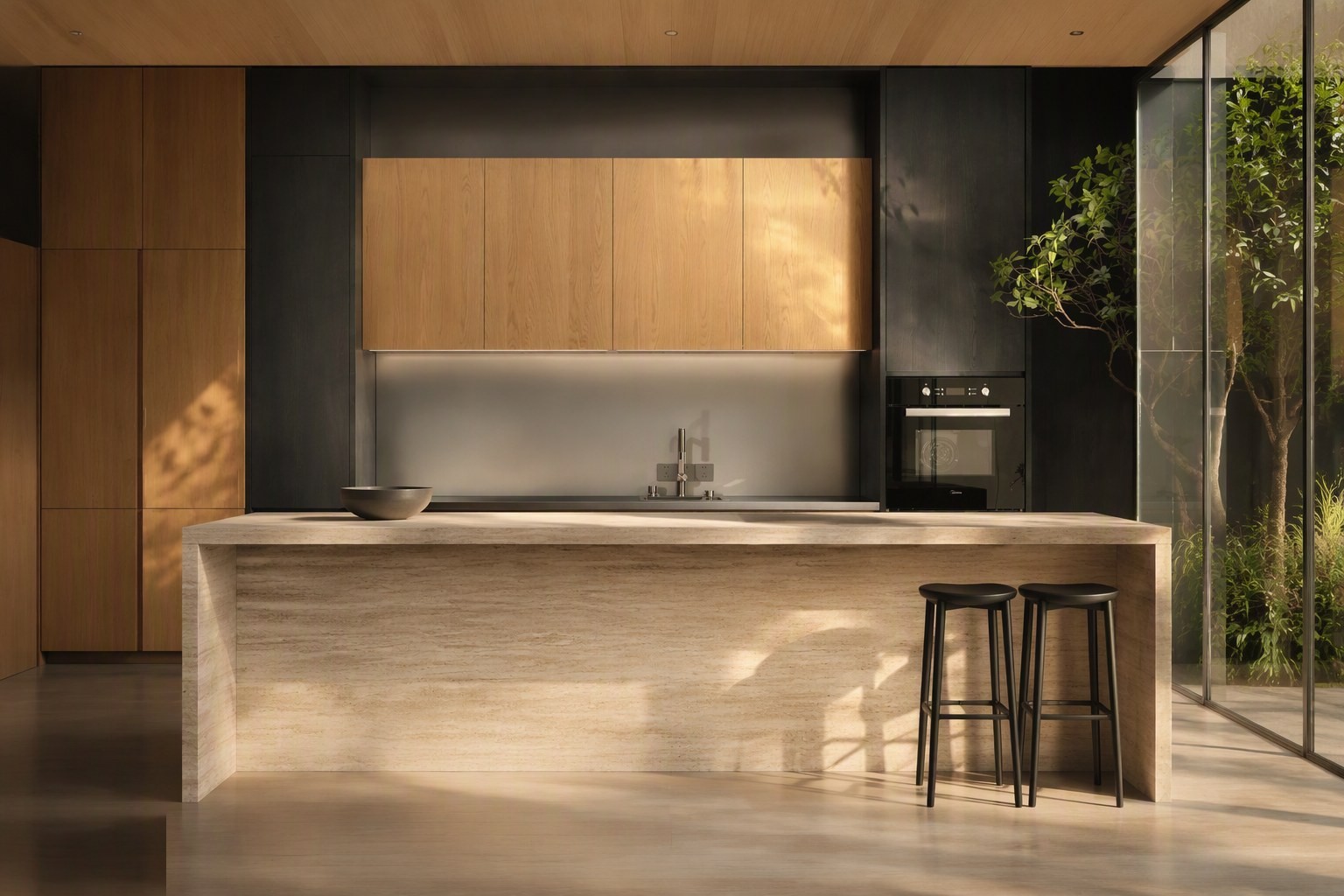
The Pantheon has stood for two thousand years, and much of it is travertine. We use the same stone for kitchen islands — not out of nostalgia, but because few materials age this gracefully.
From Tivoli to today
Travertine is a sedimentary limestone deposited by hot springs near Tivoli, outside Rome. Its layered pores record the movement of water over millennia, which is why no two slabs are ever alike. For centuries it has been the stone of civic architecture — colonnades, bathhouses, piazzas. Bringing it into the kitchen continues that civic dignity at domestic scale.
We source slabs whose veining runs calm and horizontal, so the stone reads as a landscape rather than a pattern.
How we work it
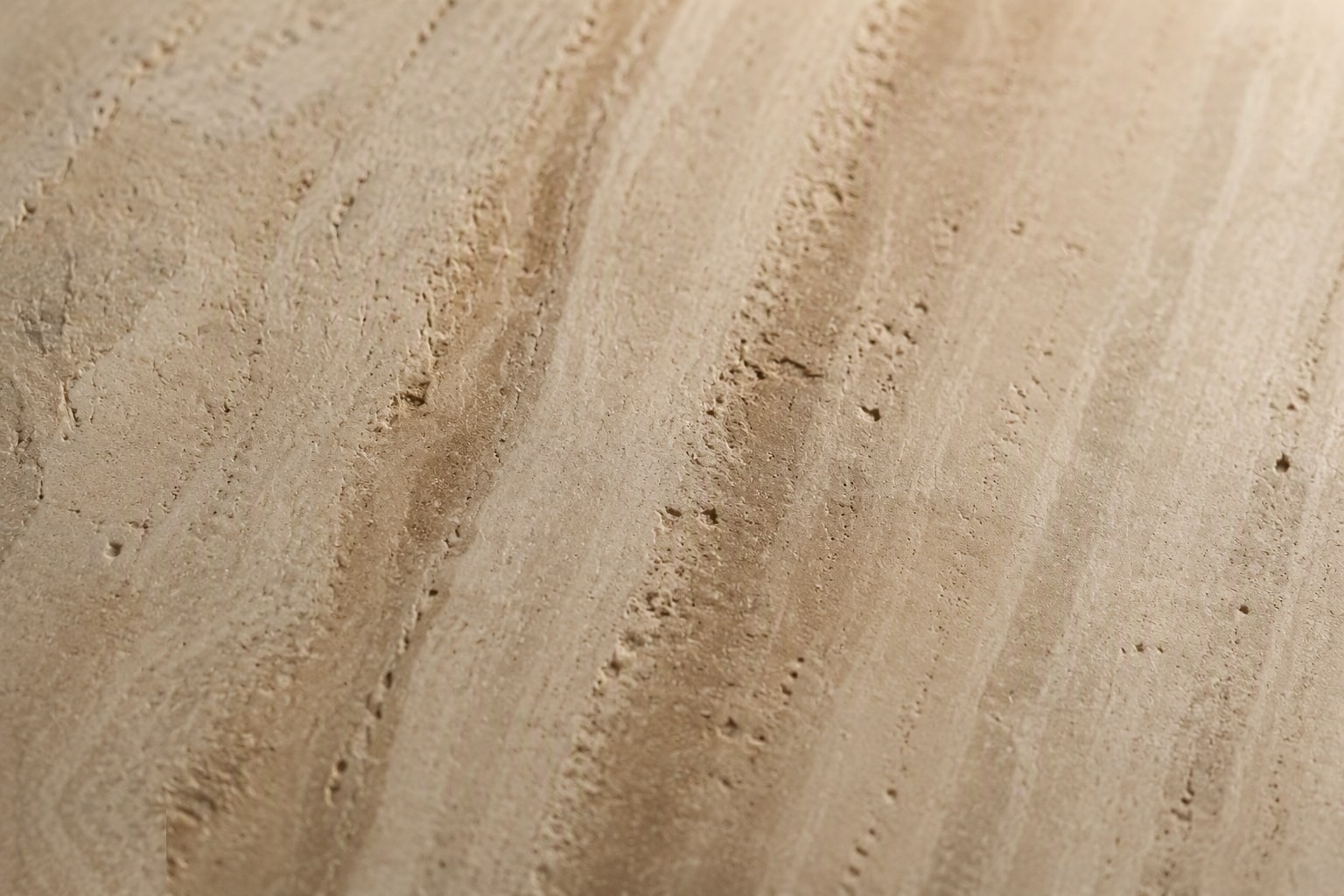
In our Foshan workshop, travertine is honed rather than polished — a matte finish that keeps the stone tactile and forgives daily use. Pores may be left open for texture or filled with a colour-matched resin for work surfaces. Edges are cut with a small chamfer that catches the light and protects the corner. Every slab is dry-laid and photographed before cutting, so the veining flows continuously across waterfall ends and upstands.
Living with stone
Travertine is honest about time. It will record your life — a faint ring, a softened edge — and grow warmer for it. Combined with oak veneer, brushed stainless steel or bronze glass, it anchors a composition the way a plinth anchors a sculpture. Visit our Foshan showroom to stand at a travertine island and feel the difference: stone at body temperature, light moving across it like weather.